
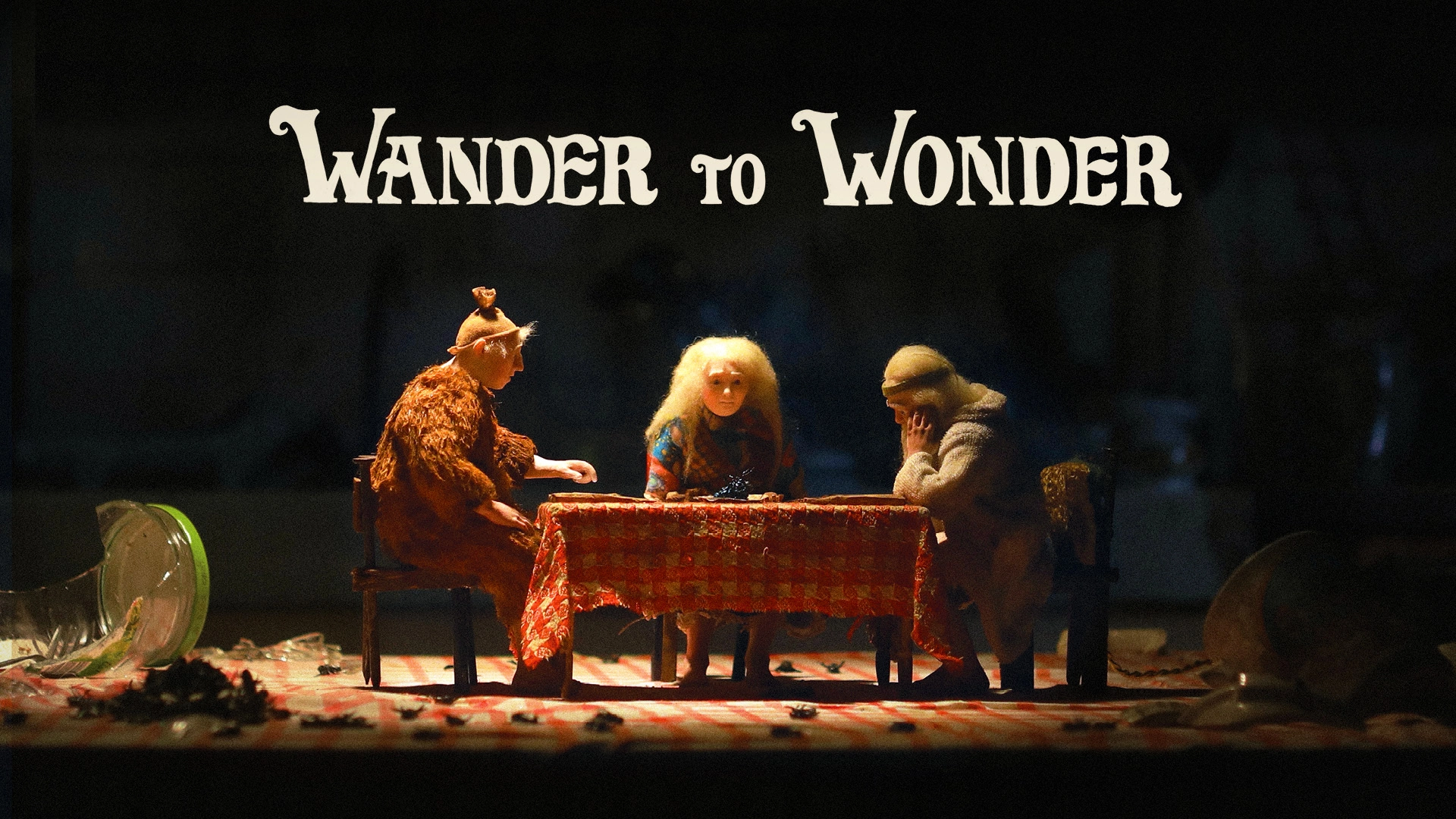
The short animation “Wander to Wonder,” directed by Nina Gantz, is a work that at first glance looks like an old, forgotten children’s show, but quickly turns into a profound drama about loyalty, loss, and survival. This review of “Wander to Wonder” shows that the film, rather than aiming to build a scary or disgusting atmosphere, is a black comedy that is deeply emotional — one that, beneath the layers of its humor, squeezes the audience’s heart.
Form and Atmosphere: A Dusty Nostalgia
In terms of form, the film is a masterful blend of stop-motion and live-action. By recreating the visual texture of 1980s VHS tapes, Gantz has created an atmosphere that is at once warm and intimate, and worn and decaying. The design of the three main characters (Mary, Billybud, and Fumbleton), while a little strange at first glance, carries facial expressions and movements full of human emotion. They are puppets with eyes that reflect sorrow and hope at the same time. The studio environment itself also acts as a fourth character — a place that was once full of light and color, and is now decaying alongside its creator.
Narrative and Story: Denying Death, Continuing the Show
The story follows three puppet performers on a children’s show called “Wander to Wonder.” Everything revolves around their creator (played by Neil Sowerby), who serves as both father and god of this small world. The narrative locks into place the moment we realize the show’s presenter has died, right there in the studio. The intelligence of the screenplay lies in treating the creator’s death not as the end of the story, but as the beginning of a new state of being. Rather than building a horror atmosphere around the corpse, the filmmaker takes a comedic-tragic approach. The puppets, unable to fully grasp death and limited in their skills to only “performing,” try to keep the show going. The scenes where they use pulleys and stage ropes to attempt simple tasks like eating are, even while funny, deeply painful. This innocent effort to preserve the order of their world forms the emotional core of the film. 
Turning Point: Playing with Fire and the End of Innocence
As hunger sets in and the characters resort even to eating insects, the film reaches its climax with a brilliant comedic-tragic sequence. Billybud, in a desperate attempt to keep the show going — or perhaps out of sheer distraction — starts juggling with lit matches. This childlike mischief, in the absence of the “creator’s” supervision, ends in disaster: a match slips from his hand and sets the studio’s fabric and wooden sets ablaze. This fire is a metaphor for the destruction of the last stronghold of childhood. The flames destroy not only the stage set, but also the illusion of “safety,” leaving the characters — who until then had lived sheltered within their colorful sets — amid ash and ruin.
The Hunt and the Confrontation with Bare Reality
After the fire, there’s no more room for false hope, and real life finally emerges. The film’s tonal shift peaks in the moment a bird enters the burned-out space. Fumbleton, a character who until then had even been terrified of the bird beyond the door, suddenly undergoes a transformation. In a sequence that is both shocking and decisive, Fumbleton lunges at the bird and drives his spear into its belly. This is no longer a cartoonish trap gag; it is a real killing, done for survival. This moment marks the puppets’ fantasy world colliding violently with the merciless laws of nature. To survive, they are forced to get their hands dirty and step outside the roles they were defined by — as cute television creatures. 
Conclusion: Review of “Wander to Wonder”
“Wander to Wonder” ends with an image of three puppets standing over their kill, staring at a light beyond their own world. Nina Gantz masterfully blends comedy and emotion to create a story where the laughter carries the bitter taste of reality. The film reminds us that sometimes, in order to grow and move forward, we must watch the past burn away — and that in order to survive, even the most innocent creatures may be forced to do things that were never written into any script.