
The Iron Sisyphus in a Purgatory of Noise and Light
In this review of the animation “Cycle”, we encounter a cold, bare-boned narrative of contemporary human loneliness, embodied in the form of a one-eyed robot. In this work, Mohammad Mehdi Hosseininejad takes us into the dark, damp back room of a space where time has frozen. Here, there is no excitement or dialogue — only the sustained sound of silence and the endless cycle of routine.
Visual Aesthetics in the “Cycle” Animation Review
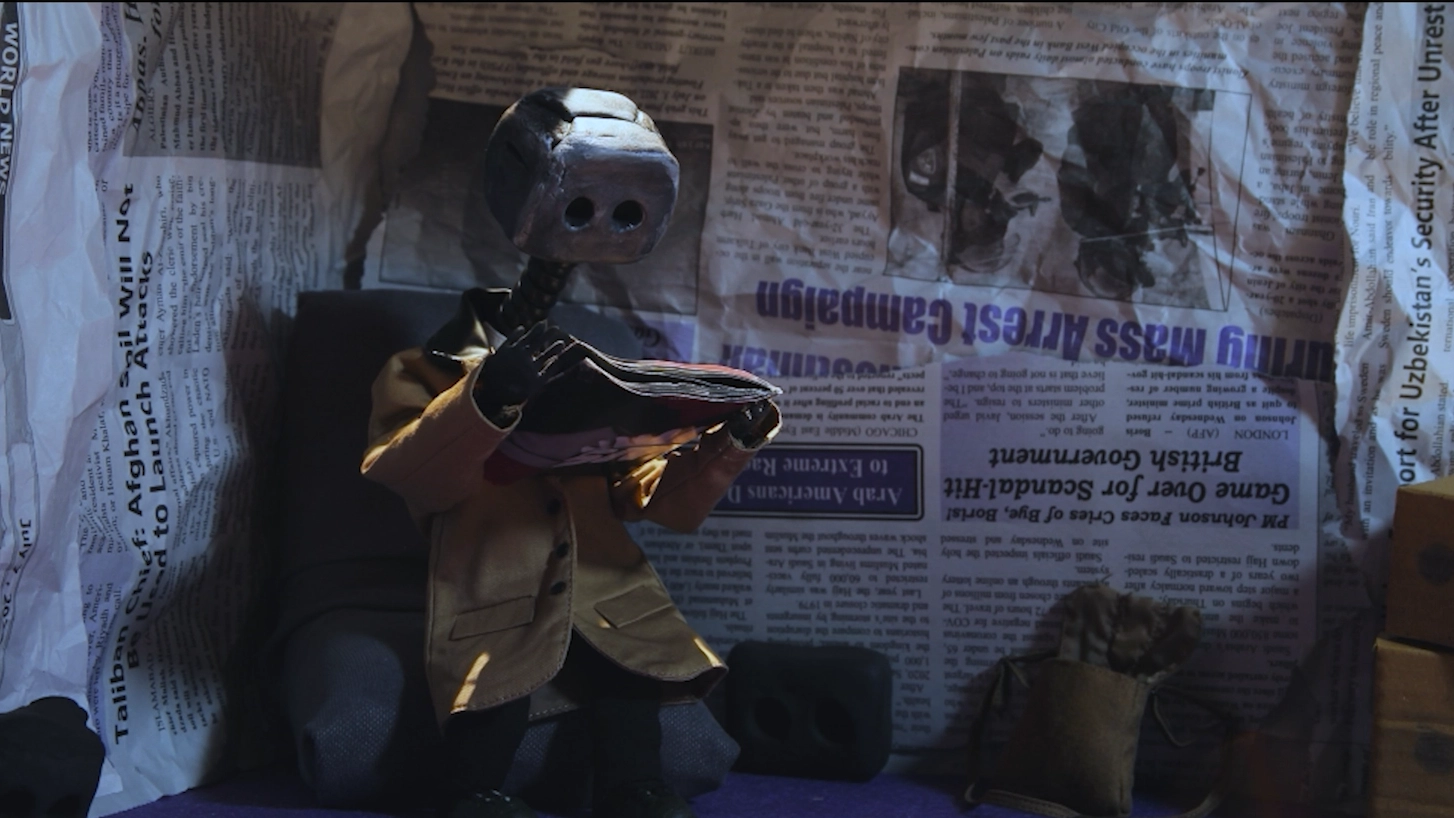
The main strength of the work lies in its intelligent choice of “medium.” To depict the real, physical world, the director employed the stop-motion technique. The rough textures of the wall, the dim lighting, and the robot’s heavy movements instill in the viewer a sense of “weight” and “wear.” We feel the weight of existence pressing down on this metal being. But precisely at the moment the robot connects its head to the energy source (or perhaps a digital narcotic source), the film’s visual structure collapses.
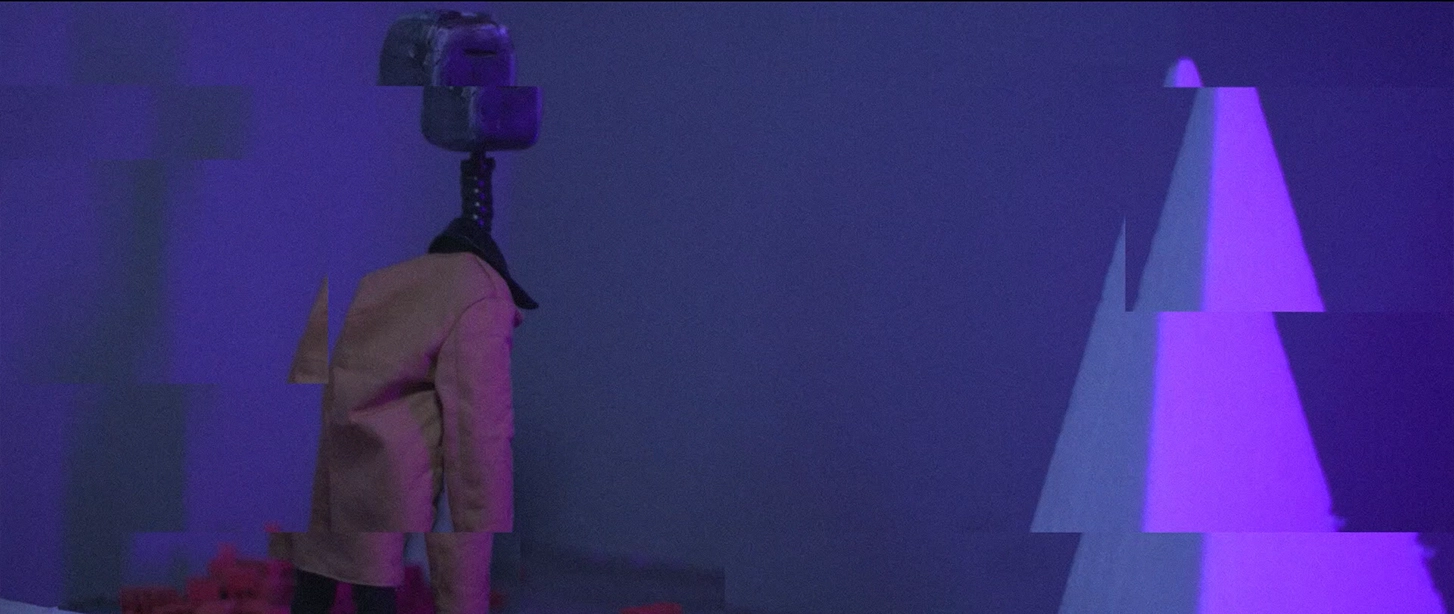
This is where the “aesthetics of the glitch” enter the picture. The transformation of the tangible three-dimensional space into trembling two-dimensional lines and visual noise is a brilliant symbol of “escape from reality.” These glitches and image jumps are not a technical error, but a reflection of the character’s mental chaos. It’s as if, for a few seconds, the robot is freed from the prison of its iron body and floats in an abstract, weightless space — a place where forms are fluid and physical logic no longer governs.
Reinterpreting the Myth of Sisyphus in “Cycle”
The narrative of “Cycle” is a modern retelling of the myth of “Sisyphus” — a futile, repetitive effort to reach something that is never attained. The robot reads books, walks, searches, but in the end, all these paths lead back to the same empty chair and the same cramped room. This circular structure intensifies the sense of entrapment and technological determinism. Is it searching for meaning? Or is it merely spinning in circles according to a pre-written program?
In “Cycle,” the sound design and industrial ambiance serve the role of the score. The creaking of joints, the electric “hum” of machinery, and heavy silence create a melancholic atmosphere that draws the viewer into the robot’s isolation.
Conclusion of the “Cycle” Animation Review
Ultimately, the presence of “Cycle” at the Puyan Festival reflects animation cinema’s tendency toward deep philosophical concepts. By avoiding excess and relying on the contrast between “matter” and “mind,” this work crafts a narrative of wandering souls in the age of machines. “Cycle” is a work that never ends — instead, it keeps repeating in the viewer’s mind, just like its name.
If you’re interested in this kind of film analysis, you can also read other film reviews on our site.