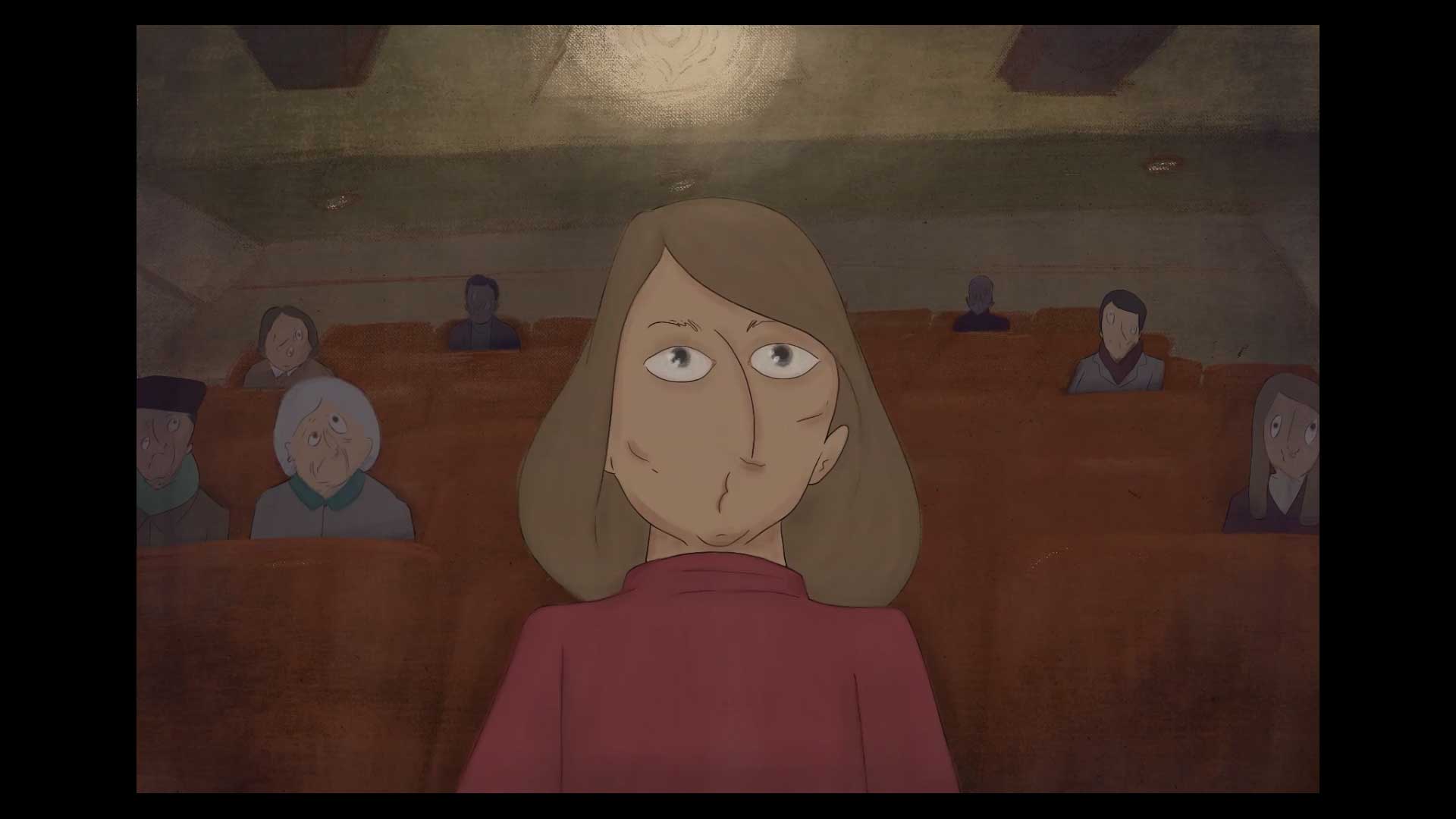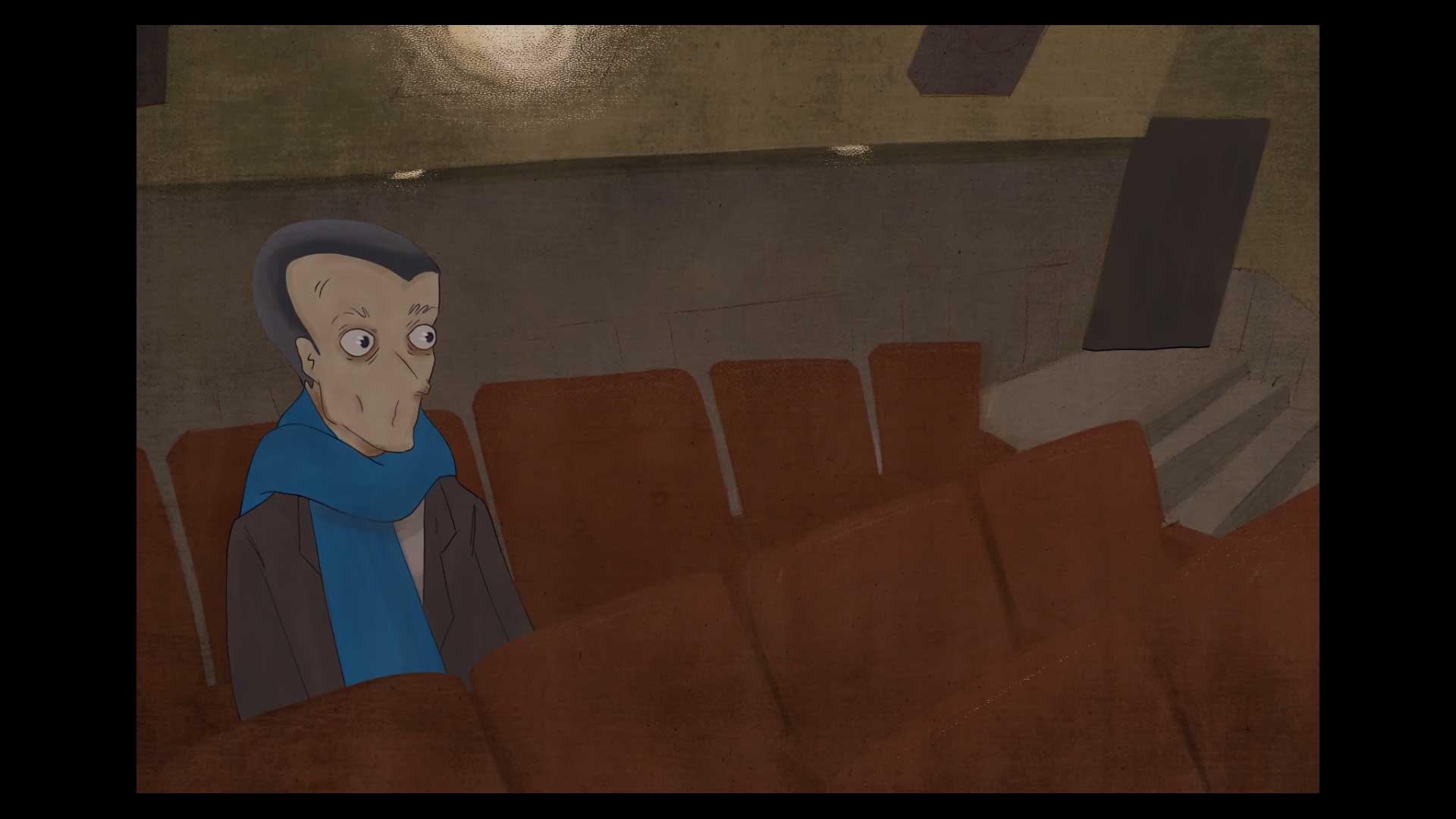
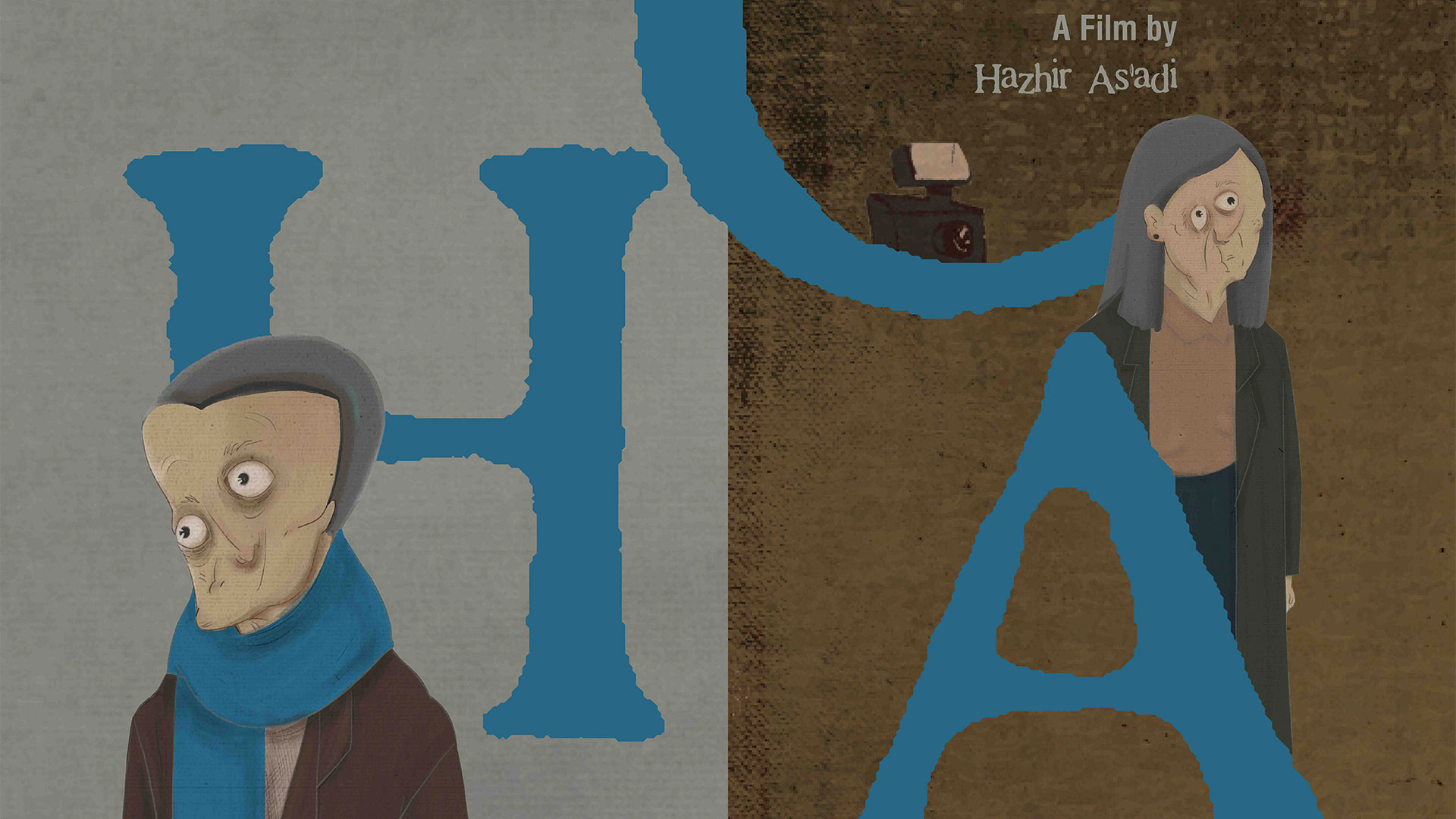
The animation “Chawk” is a work that, rather than following a linear narrative, invites the viewer into an “atmosphere” — one in which the boundary between the silver screen of cinema and the gray walls of the city gradually dissolves. In this piece, the creator, with exemplary command of visual language, has built a world in which “seeing” and “gazing” are the characters’ primary actions.
Visual Style in “Chawk”
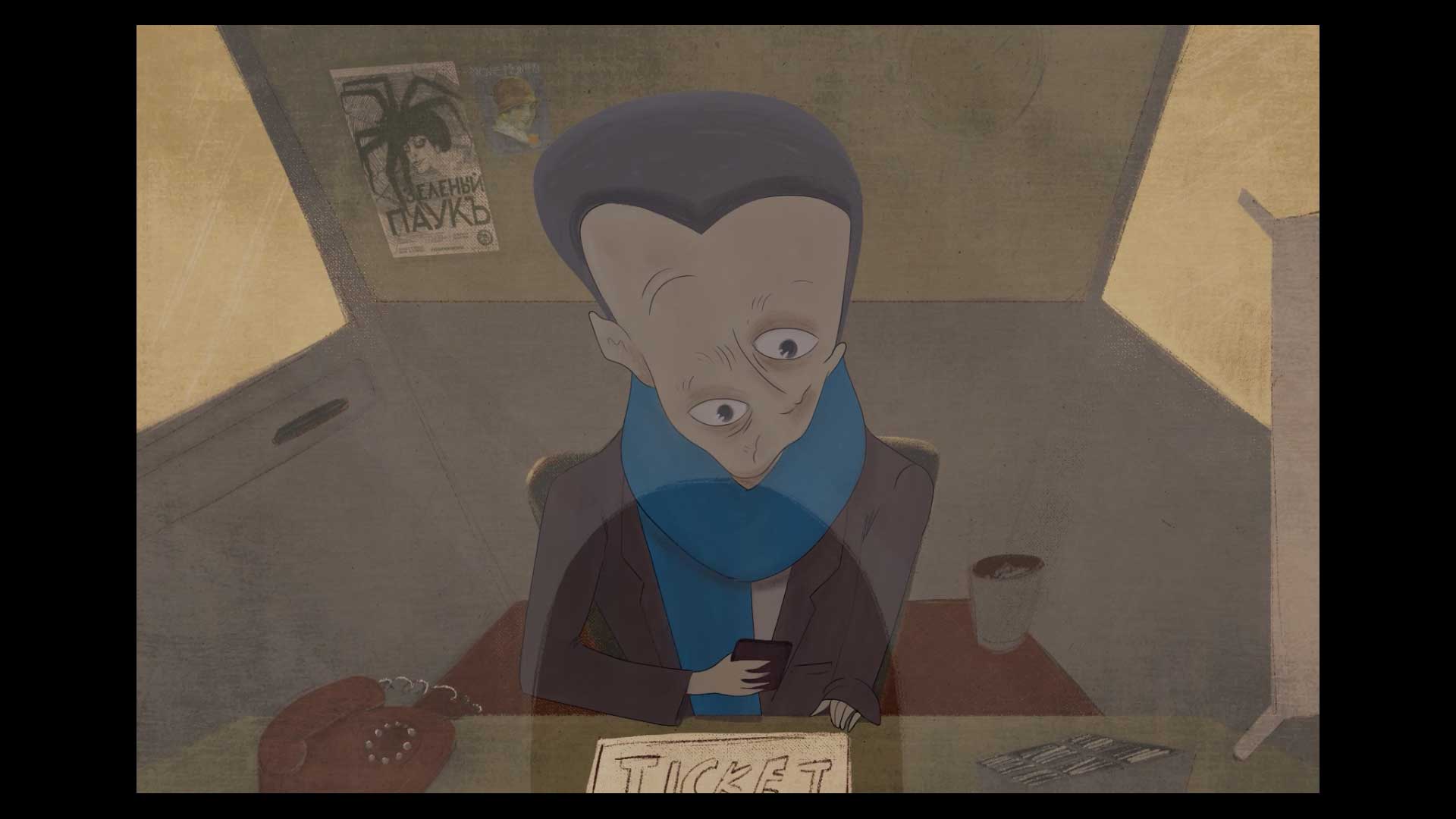
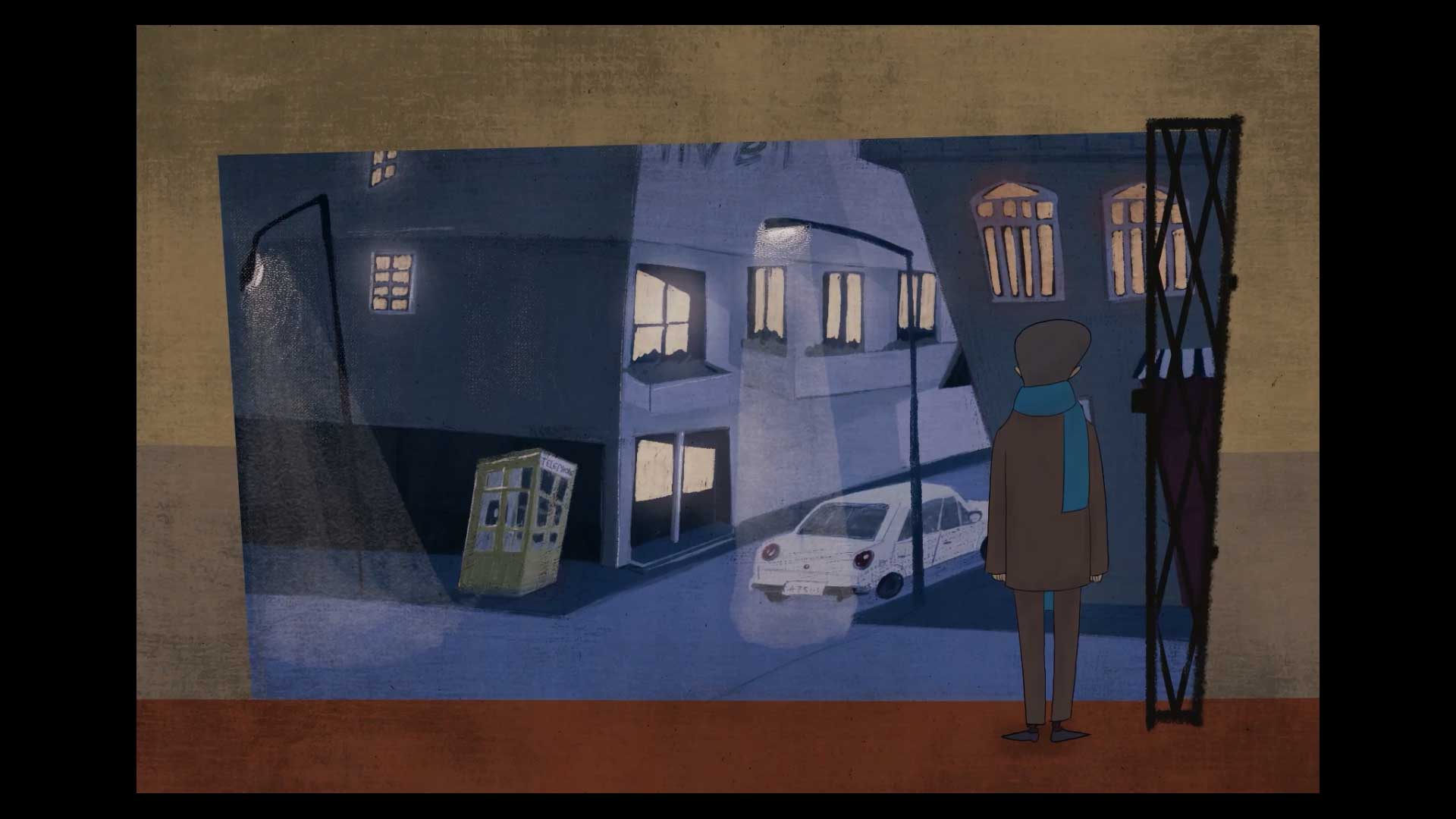
Stylistically, “Chawk” draws on expressionist traditions. Trembling, textured lines, a cold and muted color palette (leaning on grays, browns, and dark blues), and character designs with deformed faces and asymmetrical eyes instill a sense of “alienation” and “isolation.” This facial deformation is a deliberate choice to depict the hidden psychosis at the heart of a society the main character tries to escape by taking refuge in the magic of cinema.
Cinematic References and Direction in “Chawk”
Technically and in terms of direction, the work is rich with precise cinematic references. The presence of classic posters from film history (such as works by Murnau and Dreyer) is not merely decorative — it also provides a key to entering the protagonist’s mindset. The animator has skillfully designed the transitions so that the real world and the world of film become intertwined. The sequence where snow inside the film turns into snow on the street is a brilliant example of this visual economy. The camera movements and découpage are designed not in the style of classic animation, but with the logic of “live cinema,” revealing the author’s deep understanding of the cinematic medium.
Sound Design and Auditory Atmosphere in “Chawk”
Sound design and auditory atmosphere also play the role of an invisible narrator in “Chawk.” Long silences, broken only by the sound of the cinema projector or the ambiance of the city, deepen the weight of the character’s loneliness. This sonic minimalism allows the viewer to focus on visual details and the subtle shifts in the characters’ facial expressions.
Conclusion
“Chawk” raises the standards of the Puyan Festival to a new level. This animation is a “lived cinematic experience,” told through a universal visual language and cohesive technique. The presence of such a work at the festival signals a vision in which animation is not merely a tool for entertainment, but a powerful medium for exploring humanity’s relationship with art and reality. With “Chawk,” the author displays a firm visual language and a personal signature — one that blends the bitterness of reality with the sweetness of cinematic nostalgia, leaving the viewer spellbound.