Tangible Dread: When Felt Breathes
In this
analysis of the animation “Bug”, we examine the short film created by Ali Masoumi — a work that goes beyond a purely formalist exercise to become a masterclass in “breathing life into the difficult.” This piece proves that stop-motion is not merely frame-by-frame photography, but the act of instilling a soul into a form that is inherently inclined toward stillness.
The Material Challenge in “Bug”
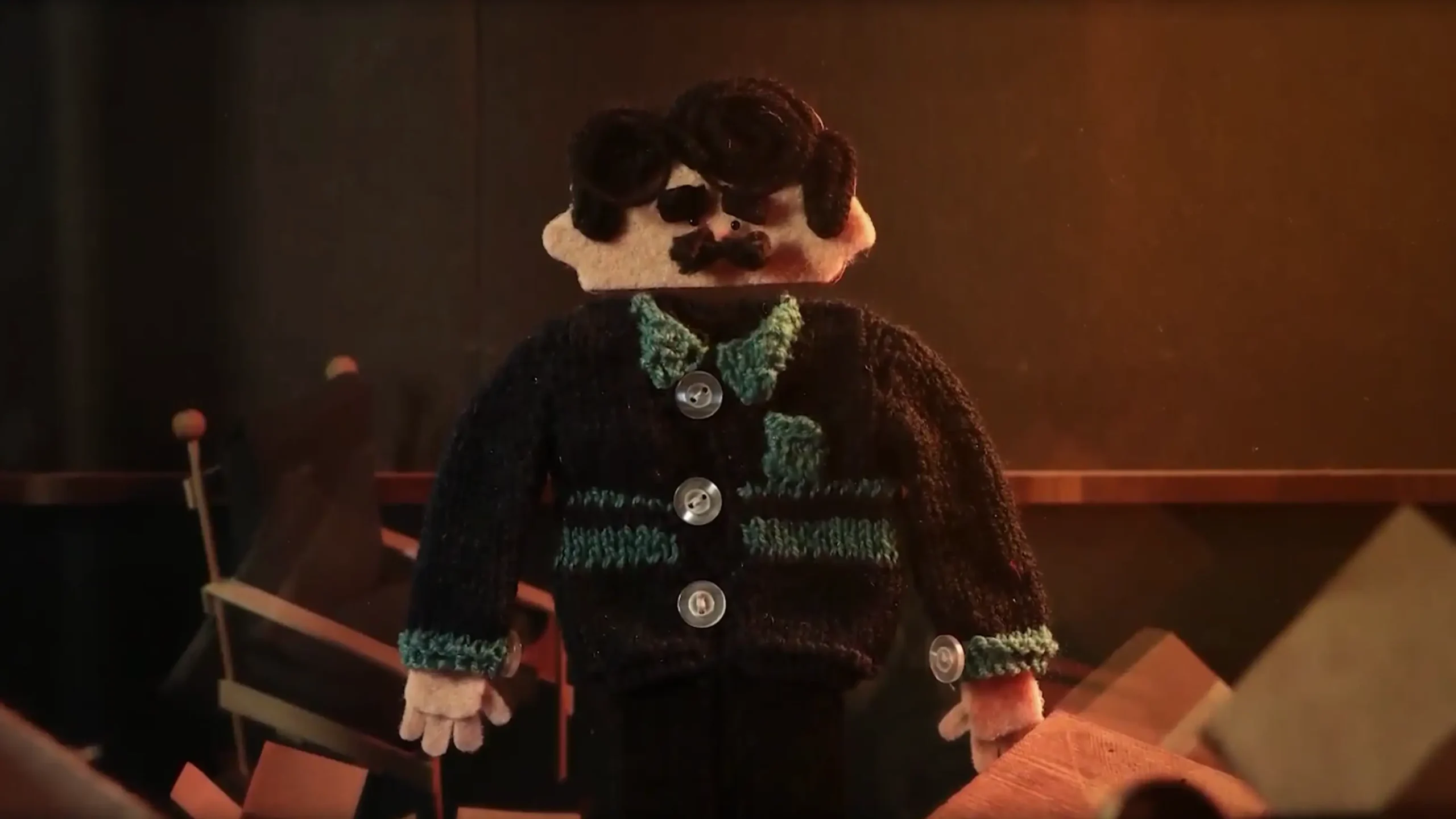
The first thing that stands out in “Bug” is its mastery over the challenge of “material.” Working with felt and fiber in stop-motion is an animator’s nightmare, since maintaining volume and textural continuity while moving the puppet is extremely difficult. Yet here, the character animation is not only flawless but possesses a kind of “organic fluidity.” The slight trembling of fibers on the characters’ bodies (technically known as the “boiling effect”) serves the film’s unsettling atmosphere, conveying a persistent nervous energy and anxiety.
Movement Mechanics and Performance in “Bug”
From the standpoint of “movement mechanics” and “performance,” the animator succeeds in conveying weight and gravity convincingly to the viewer. The puppets don’t simply move — they feel the “heaviness” of the situation. The way the father and child characters walk, pause, and physically react is precise and deliberate. This precision in the animation heightens the compelling contrast between the “visual softness of felt” and the “narrative violence of the story.” We are faced with a soft world that behaves in a harsh, mechanical way — a paradox born of intelligent animation.
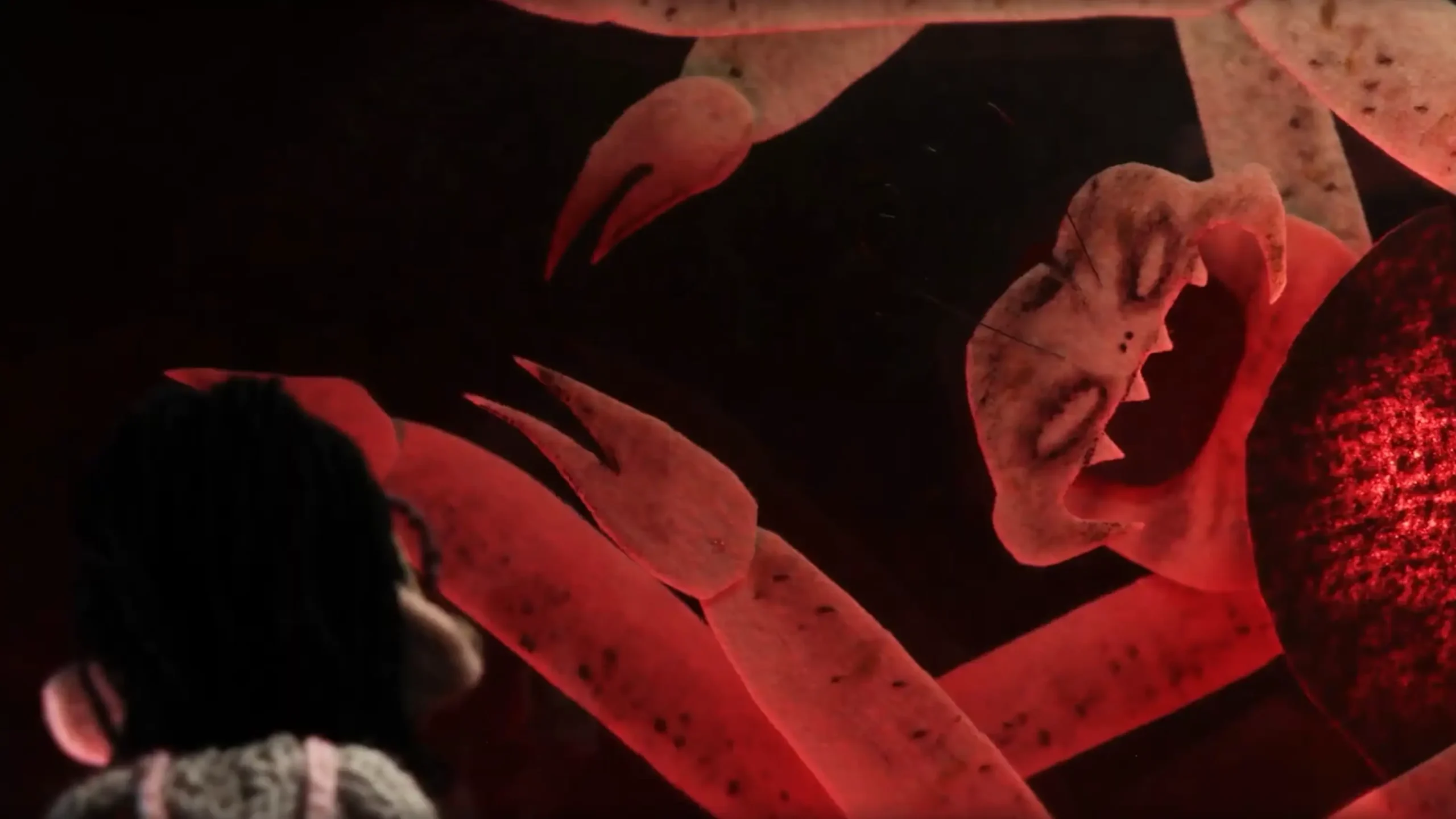
Alongside the outstanding animation, art direction and lighting play complementary roles. The shift in color palette from neutral tones to saturated reds in the nightmare sequences provides fertile ground for more exaggerated movements to stand out. Expressive lighting, through sharp shadows, helps the animator emphasize the felt texture and deepen the three-dimensionality of the images.
Conclusion of the “Bug” Animation Analysis
Ultimately, “Bug” is a work that demonstrates why animation in stop-motion is an art beyond mere technique. Ali Masoumi, through mastery of his tools and a correct understanding of the physics of movement, has succeeded in creating a coherent world in which material, light, and sound all serve a single goal: delivering a pure sensory experience of dread.
To learn more about the stop-motion technique, you can also read
this article. Also, if you’re interested in
Puyan’s selected animation analyses, you can read more on our site.