Neon Silence: When a Mouse Really Eats a Child’s Tongue
The animation “Bougainvillea” is a raw depiction of a child’s mind caught in a barrage of words and idioms. In this work, Neda Sangtarash takes the viewer on a journey through the labyrinth of “memory, imagination, and nightmare.” The child narrator, in trying to make sense of the cruel and ever-shifting world around her, has no choice but to believe everything — even something as frightening as the phrase “a mouse ate your tongue.”
Language: Where Metaphors Come Alive
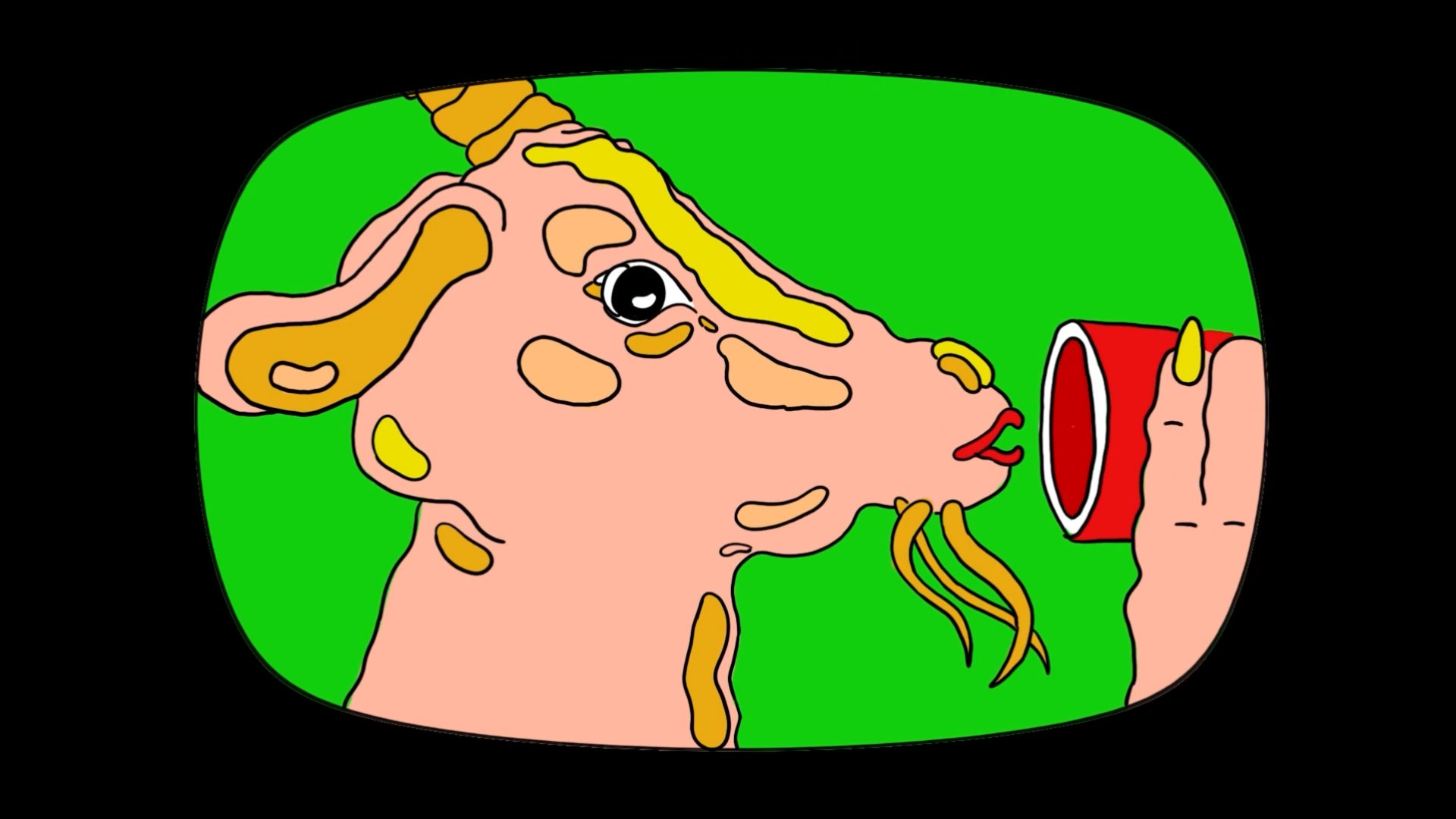
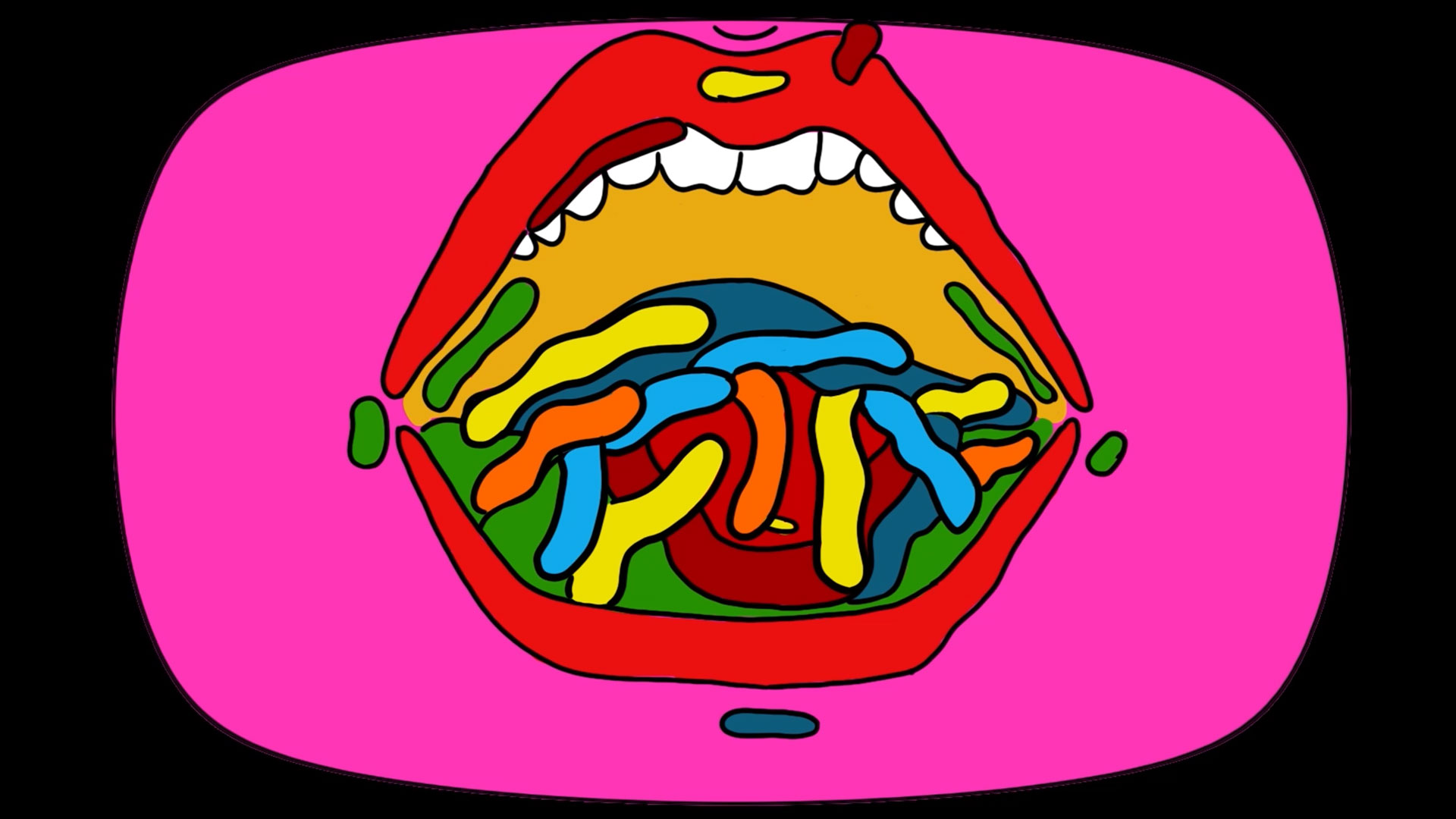
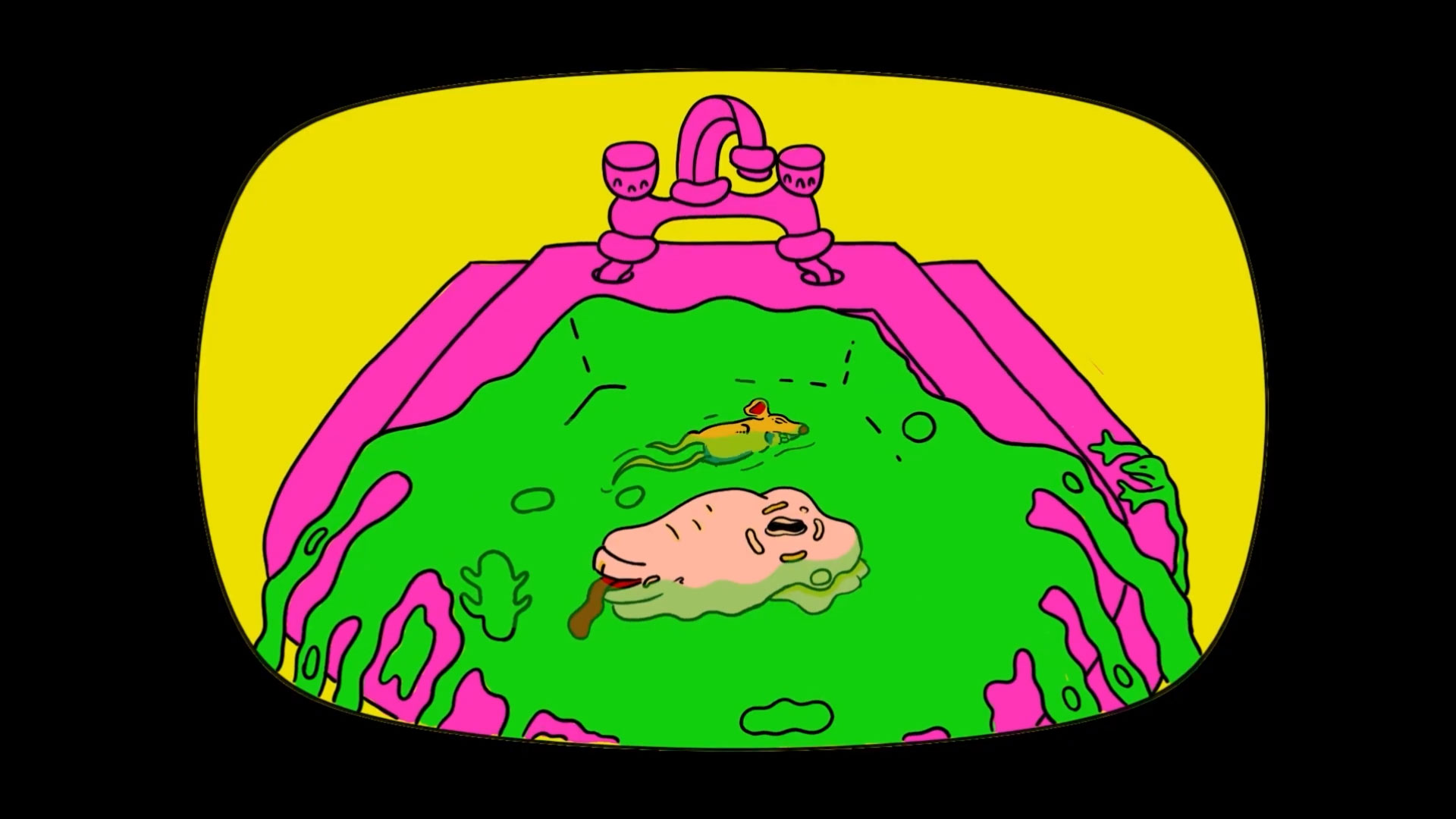
The fundamental feature of “Bougainvillea” is the terrifying embodiment of language. In the adult world, metaphors are merely tools of expression; but in this animation, words come alive and turn into reality. When someone says a bouquet of flowers “was thrown into the water,” a flood of flowers drowns the house. When a child falls silent, a mouse steals her tongue. By drawing on children’s literal interpretation of language, the director creates images that, while colorful, are anxious and unsettled.
The Visual World: The Border Between Imagination and Nightmare
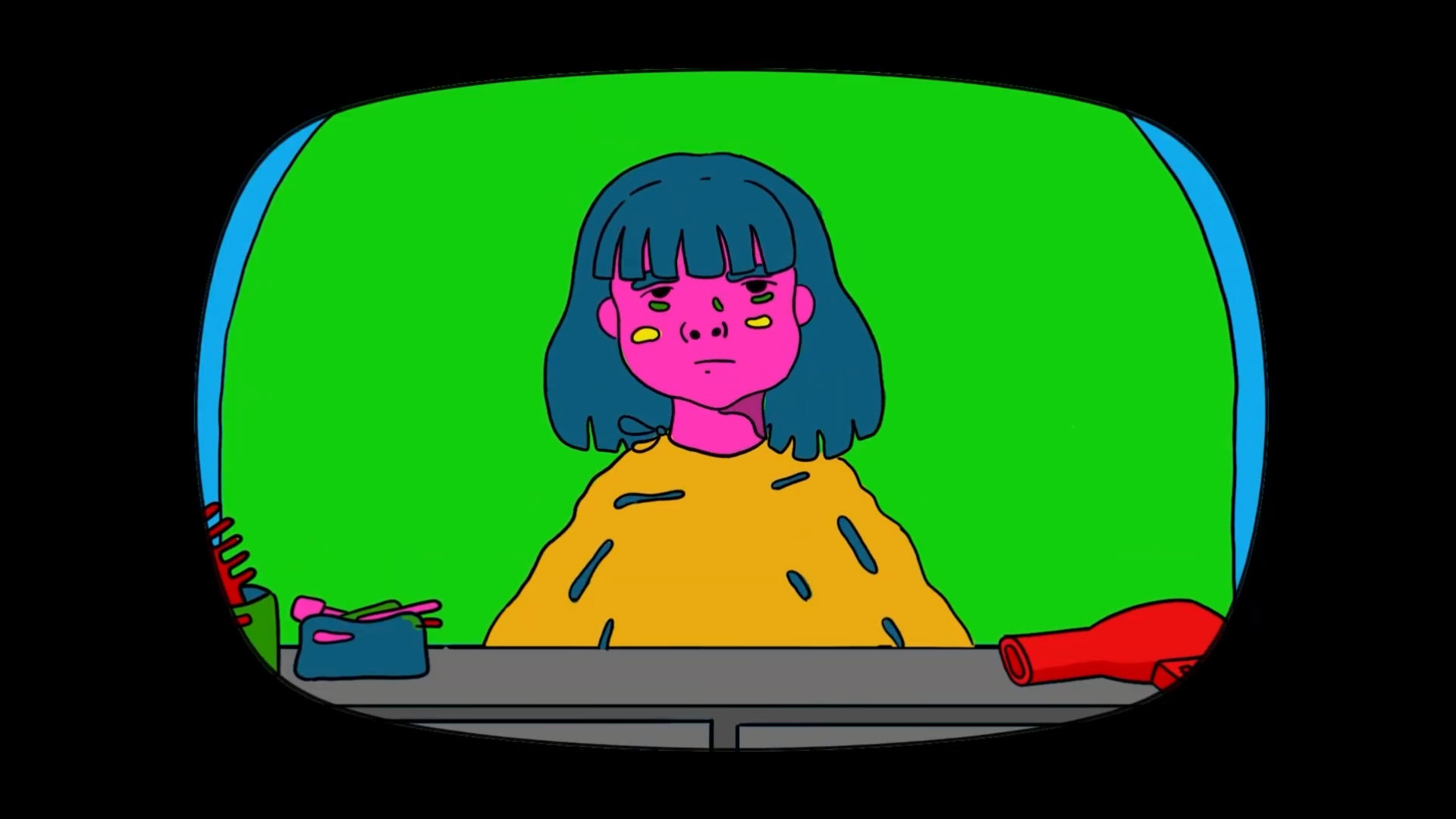
Visually, shifting, fluid forms are the best choice for depicting the unstable world of a child. From her point of view, nothing is certain. Toys turn into monsters, and the safety of home collapses in an instant.
The pop color palette and saturated colors like pink, green, and phosphorescent tones serve two functions. On one hand, they evoke children’s drawings; on the other, they create a feverish, hallucinatory atmosphere that erases the boundary between waking life and nightmare.
Sound: A Narrative of Loss
The sound design and the narrator’s tone further reinforce this sense of disorientation. The voice sounds as if it comes from the depths of water or the bottom of a well, signaling a great loss — the loss of home, safety, and ultimately, the power of speech. The film’s music also creates a heavy, ethereal atmosphere. The contrast between this music and the lively imagery deepens the film’s melancholic feel.
Conclusion
“Bougainvillea,” at the Puyan Festival, stands as a bold representation of child psychoanalysis through experimental animation. The film shows how a simple, everyday phrase can become a terrifying truth in a vulnerable child’s mind. “Bougainvillea” is an elegy for an innocence that loses its voice when confronted with mistakes, left alone in a world that is constantly shifting shape.